Why Version Control Exists: The Pendrive Problem
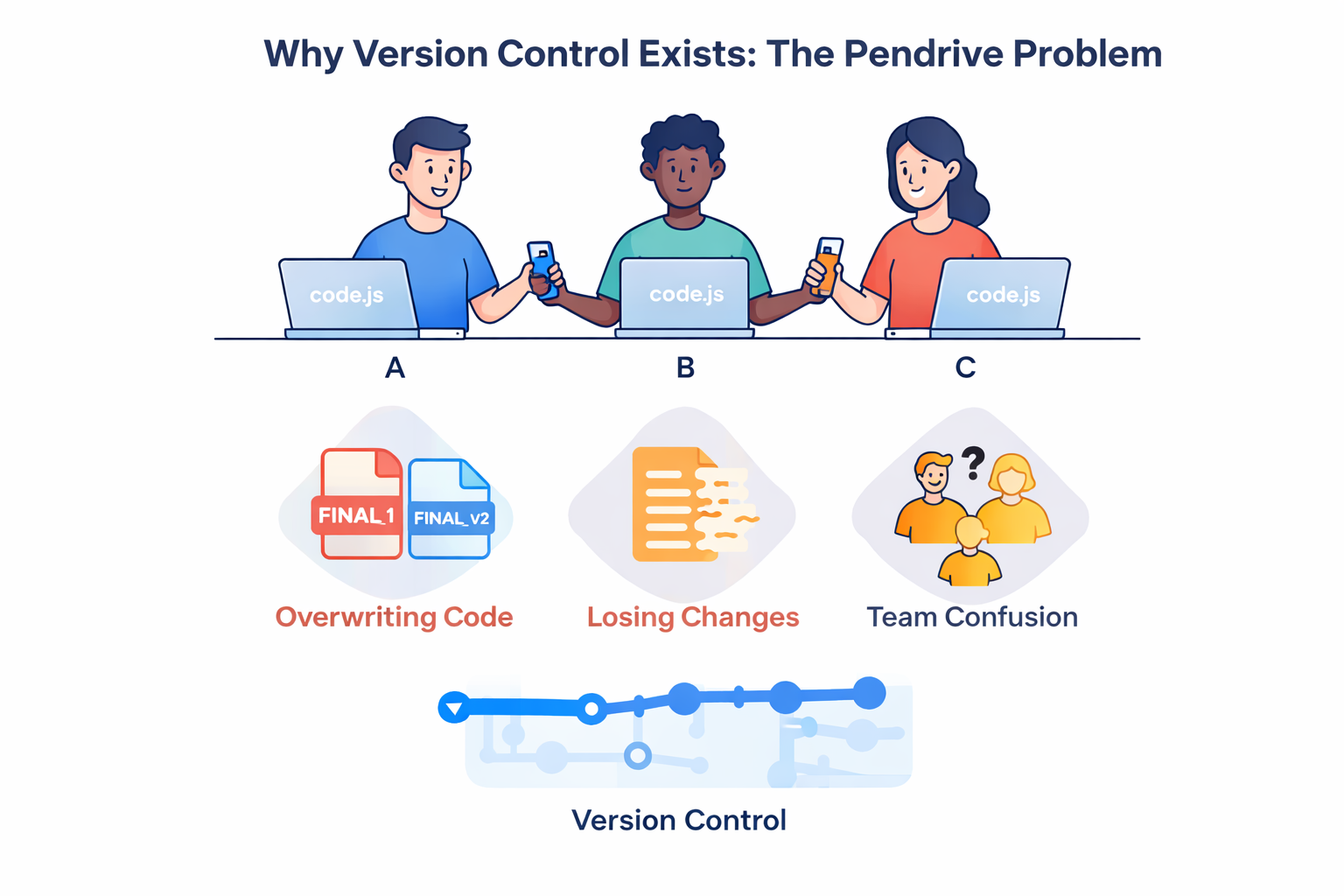
If you’re new to programming, tools like Git and GitHub may feel confusing or unnecessary at first.
You might wonder:
“Why can’t we just save files and share them using pendrives or emails?”
To answer that, let’s revisit a real problem developers faced before version control systems existed —
the Pendrive Problem.
This simple analogy explains why version control became mandatory in modern software development.
What Is Version Control?
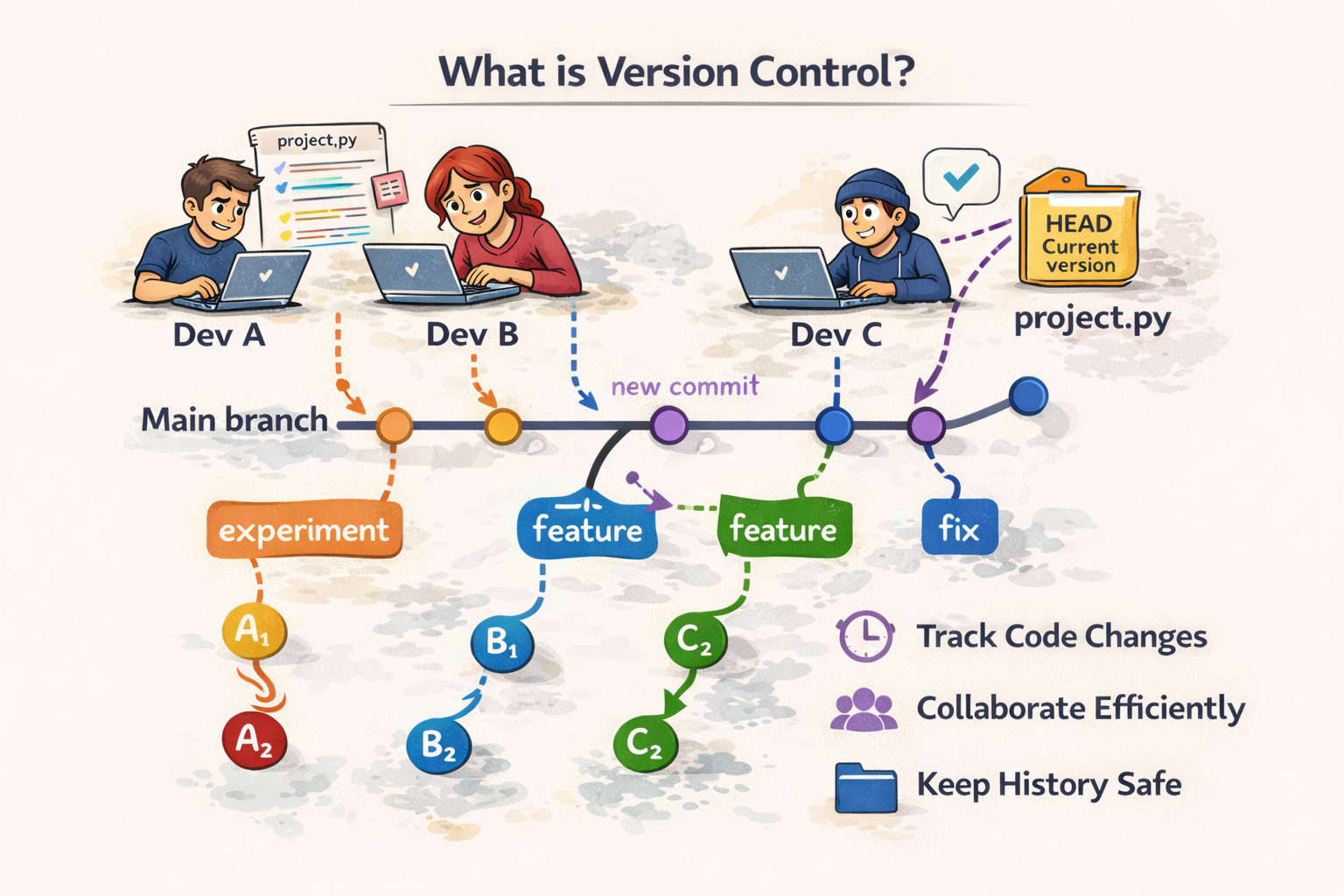
Version control is a system used in software development to manage and track changes in code over time. It safely stores previous versions of files so that developers can review history, compare changes, and restore older versions if something goes wrong. Version control also allows multiple developers to work on the same project simultaneously without overwriting each other’s work. By keeping a complete record of modifications, it helps teams collaborate efficiently and recover easily from mistakes.
Why Version Control Exists ?
Version control exists to solve one core problem:
“Managing changes in code when multiple people are working, over time, without losing anything.”
Code is not written once. It evolves:
Bugs are fixed
Features are added
Old logic is replaced
Multiple developers touch the same files
Without a system to track these changes, things quickly fall apart.
The Pendrive Analogy in Software Development :
Before Version Control Exists, developers commonly shared code using:
Pendrives
Emails
Local folders
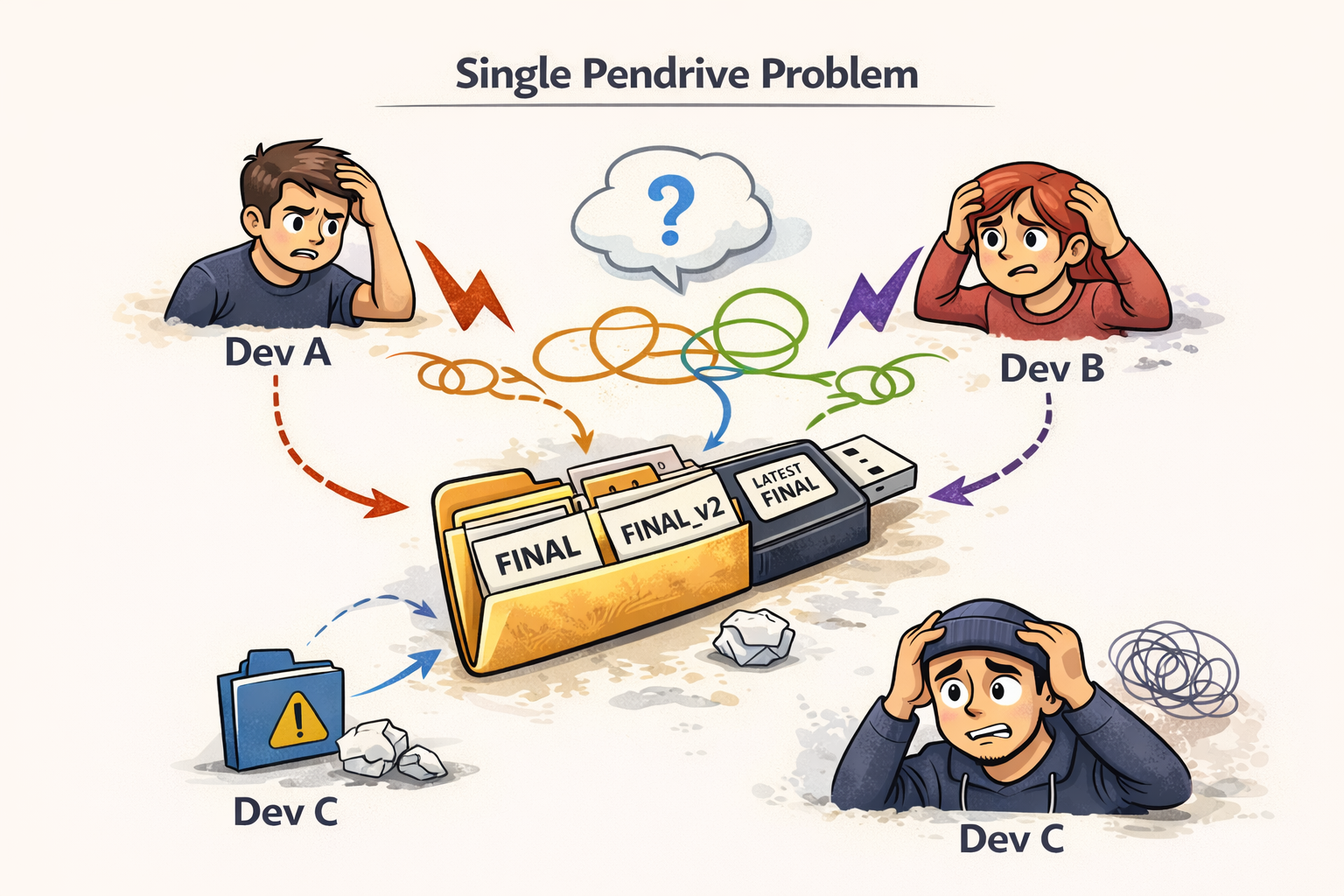
A typical project directory looked like this:
project/
 ├─ final/
 ├─ final_v2/
 └─ latest_final/
Each folder existed because someone was afraid of losing previous work.
Now imagine this workflow:
Developer A copies the project to a pendrive
Developer B edits the same files separately
Both return with different versions
Nobody knows which one is correct
This confusion is called the Pendrive Problem.
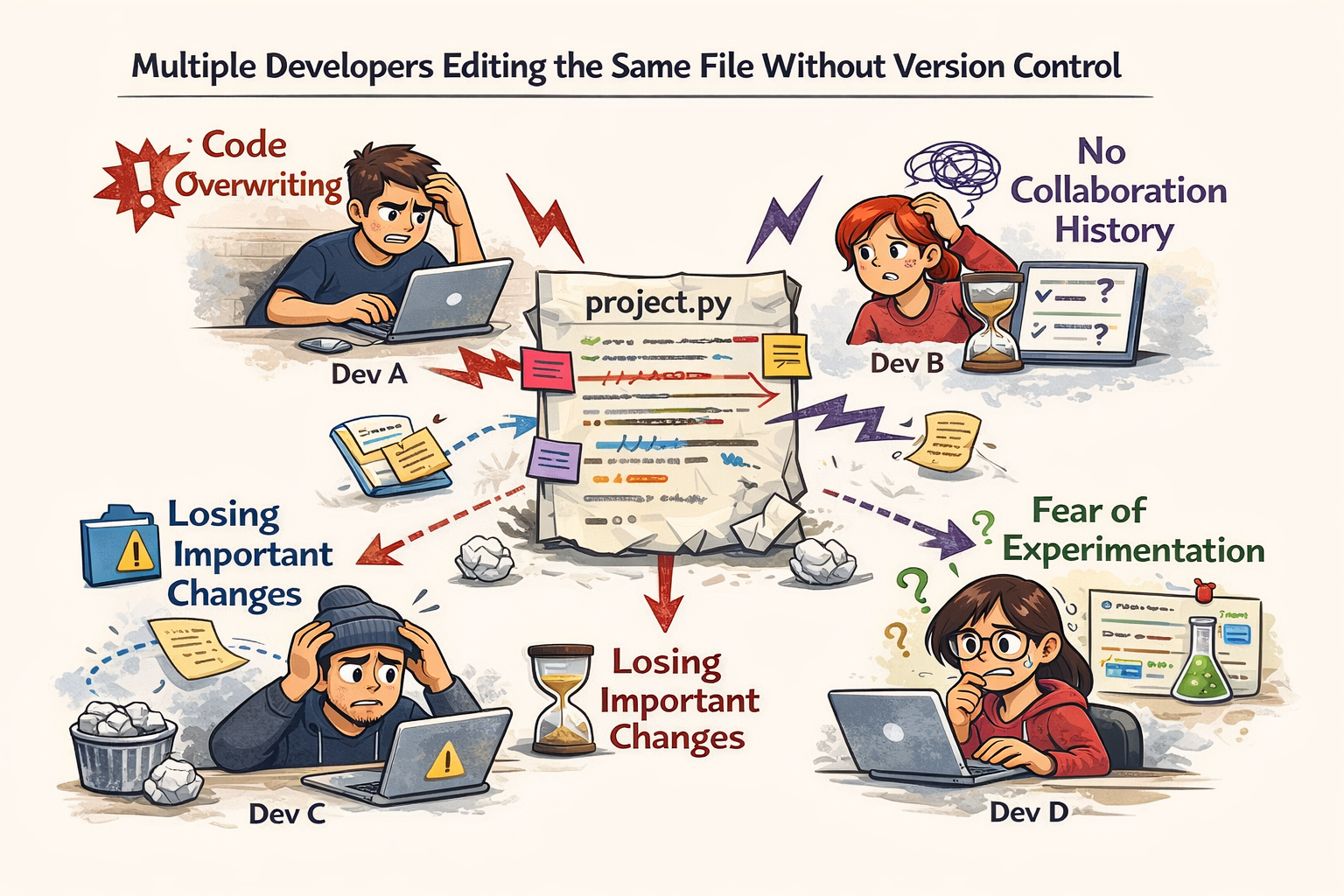
Problems Developers Faced Before Version Control :
1. Code Overwriting
One small mistake could overwrite hours or days of work.
There was:
No change history
No undo option
No way to recover deleted code
2. Losing Important Changes
Developers couldn’t answer basic questions like:
When was this feature added?
Which change broke the application?
What did I modify yesterday?
Once a file was replaced, the older version was gone forever.
3. No Collaboration History
Teams had no visibility into:
Who wrote which code
Why a change was made
How the project evolved
Debugging became guesswork instead of logic.
4. Fear of Experimentation
Without a safety net:
Developers avoided trying new ideas
Breaking the project meant starting over
Innovation slowed down
The Real Team Collaboration Problem :
Now scale the pendrive problem to:
5 developers
10 developers
100+ developers
Suddenly, questions pile up:
Who has the latest code?
How do we merge everyone’s work?
What if two people edit the same file?
How do we fix mistakes quickly?
Manual file sharing completely fails at this scale.
Why Version Control Became Essential ?
Version control systems like Git solved these problems by introducing:
Repositories → one trusted source of code
Commits → saved checkpoints in time
Branches → safe parallel development
History → complete traceability
Collaboration → teamwork without chaos
Instead of passing a pendrive:
Everyone works independently
Changes are merged safely
Nothing is permanently lost
Every mistake is reversible
Why Modern Software Cannot Exist Without Version Control ?
Today’s software:
Is built by teams
Changes constantly
Requires reliability and speed
Without version control:
Collaboration would collapse
Bugs would be untraceable
Scaling would be impossible
That’s why version control is no longer optional — it’s fundamental.
📌 Pendrive Workflow vs Version Control Workflow :
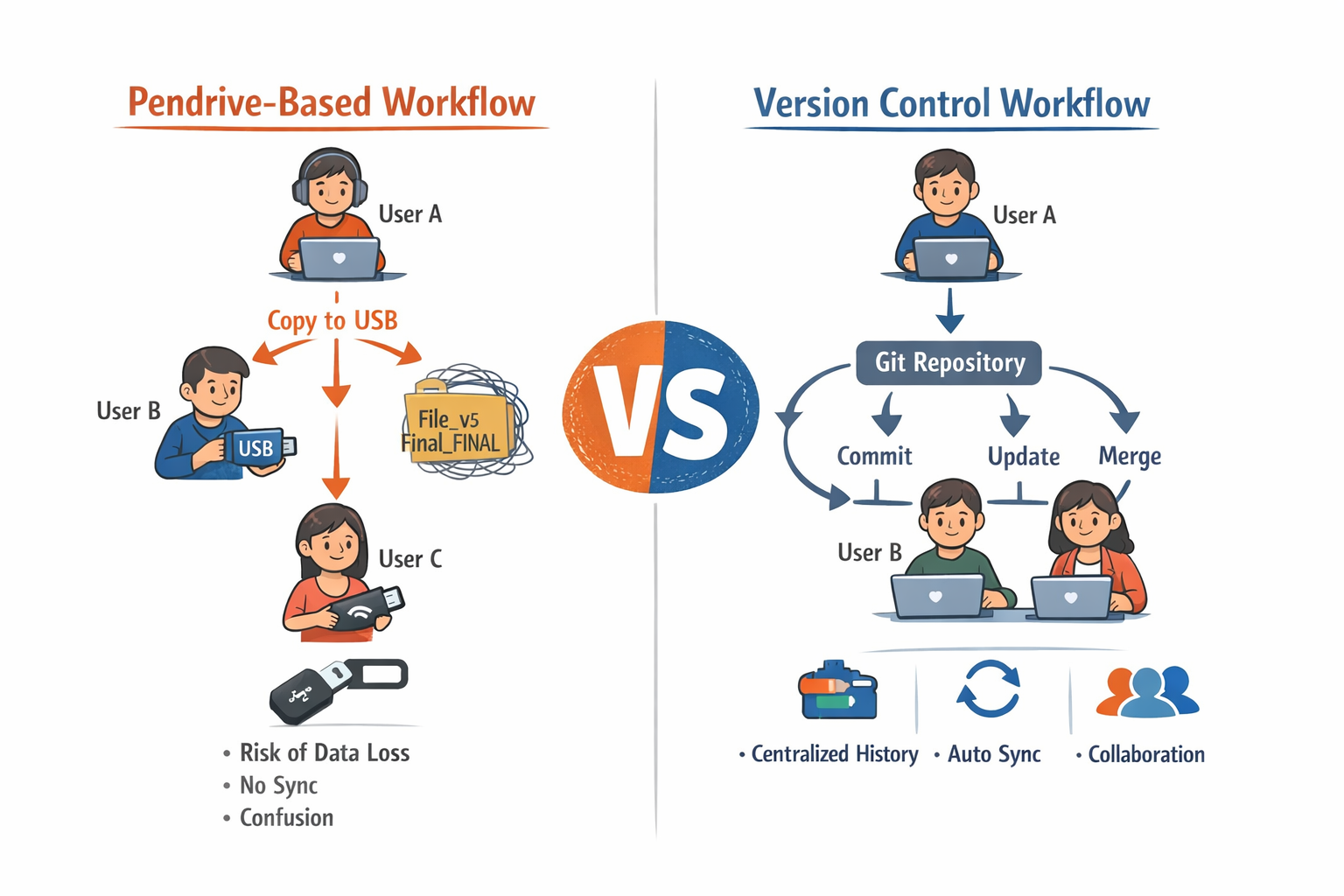
| Pendrive Workflow | Version Control Workflow |
| One copy of code | Distributed copies |
| Manual sharing | Automatic syncing |
| No history | Complete timeline |
| Easy to lose work | Easy to recover |
| Fear of breaking code | Freedom to experiment |
Final Thoughts :
The Pendrive Problem teaches an important lesson:
Managing files manually works only until collaboration begins.
Version control exists to:
Protect your work
Enable teamwork
Preserve history
Encourage experimentation
So the next time Git feels overwhelming, remember:
It exists to save you from latest_final.zip
About the author
Aspiring Full Stack MERN Developer & DSA Enthusiast | Passionate about coding, problem-solving, and scalable web applications | Turning ideas into reality | JavaScript, React, Node.js — learning by building real-world projects 🚀
Comments
Join the discussionNo comments yet. Be the first to comment.


